Free Shipping from 99,- with UPS
More than 1,000,000 satisfied customers have preceded you.
Celebrating our 10th anniversary this year
Free Shipping from 99,- with UPS
4.8 Trusted Shops 4.193 reviews
Free Shipping from 99,- with UPS
More than 1,000,000 satisfied customers have preceded you.
Celebrating our 10th anniversary this year
Free Shipping from 99,- with UPS
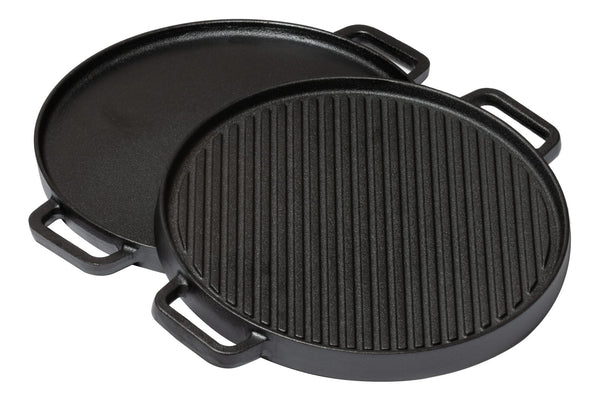
Why season a cast iron pan? Seasoning creates a non-stick coating that prevents rust and sticking. It also improves heat distribution and retention, which means dishes cook more evenly. The more often you season, the stronger the protective layer becomes and the longer your pan will last.

4 simple steps

With these easy steps, you can give your cast iron pan a strong non-stick coating and optimal protection. This way, your cast iron pans will stay beautiful, strong, and ready for years of cooking enjoyment.

4 simple steps

Step 1: Clean and dry

Always start with a completely clean pan. If there's rust or old food residue, remove it first with warm water and a brush or a soft scouring pad. Then dry the pan thoroughly with a clean, lint-free cloth and briefly place it over low heat to evaporate all moisture. This is important because water combined with cast iron can cause immediate rust.

Step 1: Clean and dry

Step 2. Oiling

Once the pan is dry, apply a thin layer of oil to the entire inside using a paper towel. Use a neutral oil such as sunflower, canola, or linseed. Wipe away any excess oil with a cloth or paper towel; the pan shouldn't be sticky, otherwise the oil may harden unevenly. The goal is a very thin, even layer that will polymerize as it heats to form a hard, black protective layer.

Step 2. Oiling

Step 4: In the oven or on the stove

Oven method: Preheat the oven to approximately 200 to 220 degrees Celsius (400 to 430 degrees Fahrenheit) and place the pan upside down on the rack so that excess oil can drain and no sticky spots form. Let the pan harden in the oven for an hour. After this time, it is important to let the pan cool to room temperature in the oven before removing it. This prevents temperature shocks that could damage the cast iron.

Stovetop method: An alternative method is seasoning on the stovetop. Use a small burner for a small pan and a large burner for a larger pan. Place the pan over low to medium heat and slowly heat the oil until it begins to smoke. Continue heating the pan for a few minutes and then let it cool. This method can be repeated several times to achieve a firmer and darker layer.

Note: Seasoning will produce an odor, which is perfectly normal. Ensure good ventilation by turning on the extractor hood or opening a window.

Step 4: In the oven or on the stove

Your pan is now ready to use!

After seasoning, the cast iron pan will have a smooth, black coating that is both protective and nonstick. Regular use and light greasing after cleaning will strengthen this coating over time, making the pan bake better and less susceptible to rust. The entire seasoning process is a combination of cleaning, oiling, and controlled heating, and it's the key to a durable, high-performance cast iron pan.

Your pan is now ready to use!

Related products